


We often dismiss unusual moments in our lives with a shrug and a familiar phrase: “just a coincidence.”
It’s a convenient explanation—one that allows us to move on without thinking too deeply about what just happened.
For a long time, I did the same.
But over the years, I began to notice a pattern that made this casual dismissal feel increasingly dishonest. These moments weren’t random at all. They were not meaningless interruptions in an otherwise logical world. They were, I came to realise, my thoughts taking form—quiet evidence of how the inner world and the outer world are deeply, mysteriously connected.
Table of contents [Show]
When Thoughts Appear in the World
I started paying attention to how often a fleeting thought would seemingly step out of my mind and into my day.
I might briefly think of something completely ordinary—a particular breed of dog, a specific model of car—only to encounter that exact thing the very next day. What struck me most was how light these thoughts were. I hadn’t dwelled on them. I hadn’t wanted anything to happen. And perhaps because of that, I found it easy to dismiss the experience as coincidence.
Yet another pattern slowly emerged.
The longer or more emotionally charged a thought became, the more abstract its manifestation seemed. The connection between inner thought and outer event was still there, but it appeared in symbolic or indirect forms—forms easy to miss unless I trained myself to notice them.
Once I did, synchronicities stopped feeling random and began to feel quietly playful, even reassuring. They became small signposts pointing toward something much deeper.
A Synchronicity I Couldn’t Ignore
One particular experience has stayed with me for years.
When I was a child, my mother owned an old 45rpm vinyl record by Guy Mitchell titled Pink Pomeranians. I hadn’t thought about that song in decades. Then one day, completely out of nowhere, it drifted into my mind. I briefly wondered why such an obscure memory had resurfaced—and then I forgot about it.
The next day, I was out walking with a friend when we noticed a man ahead of us walking two Pomeranian dogs—a breed I hadn’t seen in years. As we passed him, I also noticed he was holding a large, unmistakably pink serving of cotton candy on a stick.
I laughed out loud.
The dogs themselves weren’t pink, but the bright pink confection was an obvious abstraction of the original image. The synchronicity was too precise, too playful, to ignore.
Interestingly, there was once a trend among Hollywood socialites to dye their dogs pink—Pomeranians being a favourite. That cultural moment inspired the song all those years ago. Today, I can’t even find a trace of it online. Whether my memory altered details or the record was an obscure B-side hardly mattered. The thought emerged from the far corners of my mind—and the world answered in its own symbolic language.
Cause and Effect Reversed
Experiences like this led me to understand synchronicity as a form of true cause and effect, exactly as described in A Course in Miracles.
We are taught that the world causes our happiness or suffering, and that we merely react. But this belief, I’ve learned, has it backwards. The mind is the cause. The world is the effect.
We live in what could be described as a shared dream-state. We use the same scenery and props, but each of us projects a unique inner script onto the stage of life. An angry mind eventually encounters anger again—often in situations unrelated to its original cause, yet delivering the same emotional charge. A loving mind, by contrast, sees joy reflected everywhere.
Learning to Read the Symbols
I’ve come to understand that my world is made of my thoughts—but most of those thoughts are reflected back in symbolic forms too abstract for an untrained mind to notice.
This is where synchronicities play a vital role.
Small, fleeting thoughts are often reflected back almost literally, acting as mirrors that reveal a deeper truth. When noticed regularly, these moments become a quiet daily practice—one that improves not only awareness, but the overall spiritual quality of life.
Now, when someone I haven’t seen in years crosses my mind and I unexpectedly run into them the next day, I no longer dismiss it. I pause. I recognise how extraordinary it is that my mind is actively participating in the creation of my experience.
The freer my mind becomes from negativity, the less negativity I see reflected around me. A wholly loving mind projects a wholly loving world—and in doing so, creates the perfect environment for God to re-enter the mind completely. Or, to put it another way, wholly… Holy.
It is certainly worth thinking about.
Further Reading
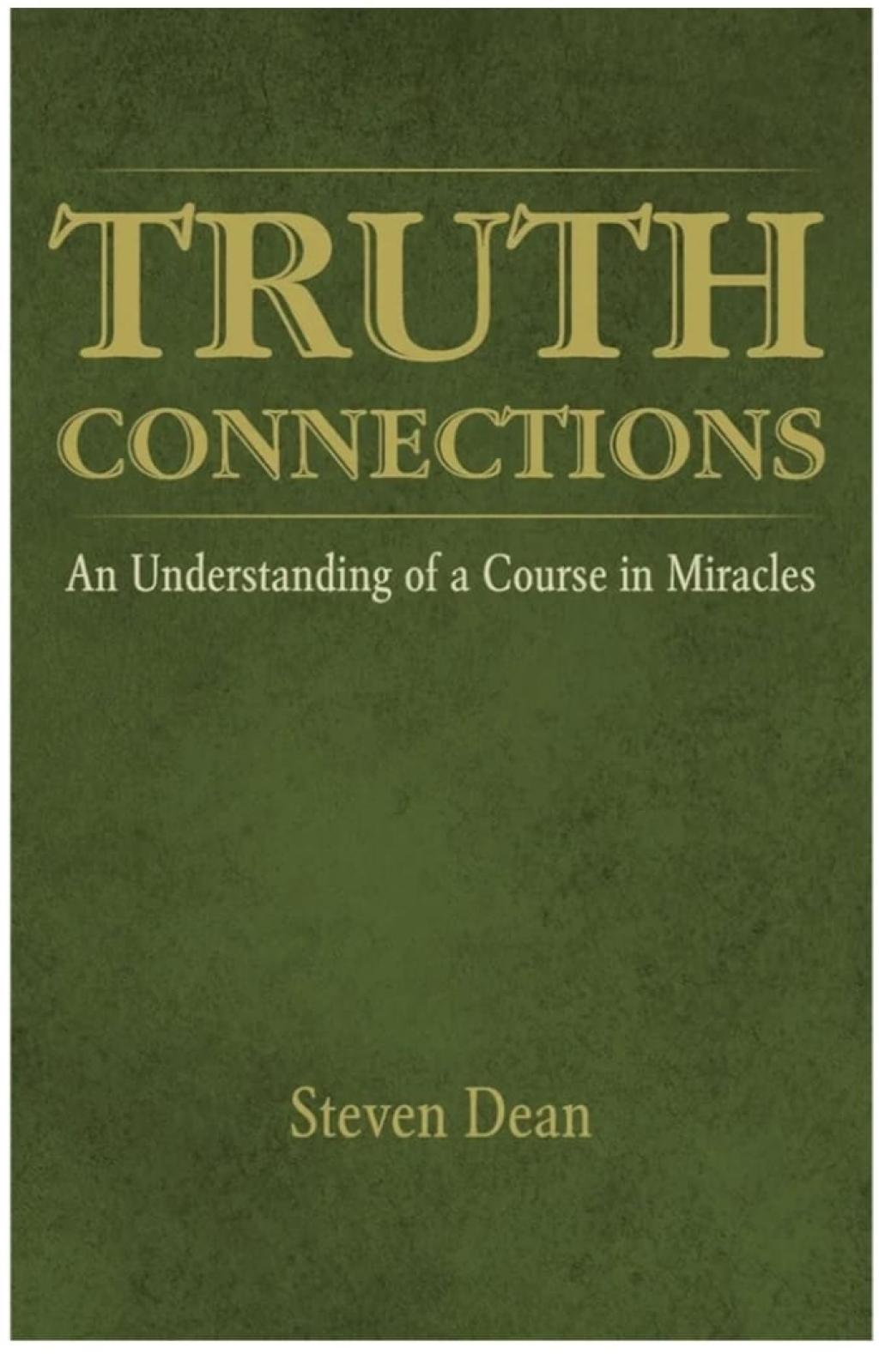
If this reflection resonates with you, you may also enjoy Truth Connections – An Understanding of A Course in Miracles, available through major online bookstores including Barnes & Noble and Amazon.






0 Comments
Leave a Comment
No comments yet. Be the first to share your thoughts!