


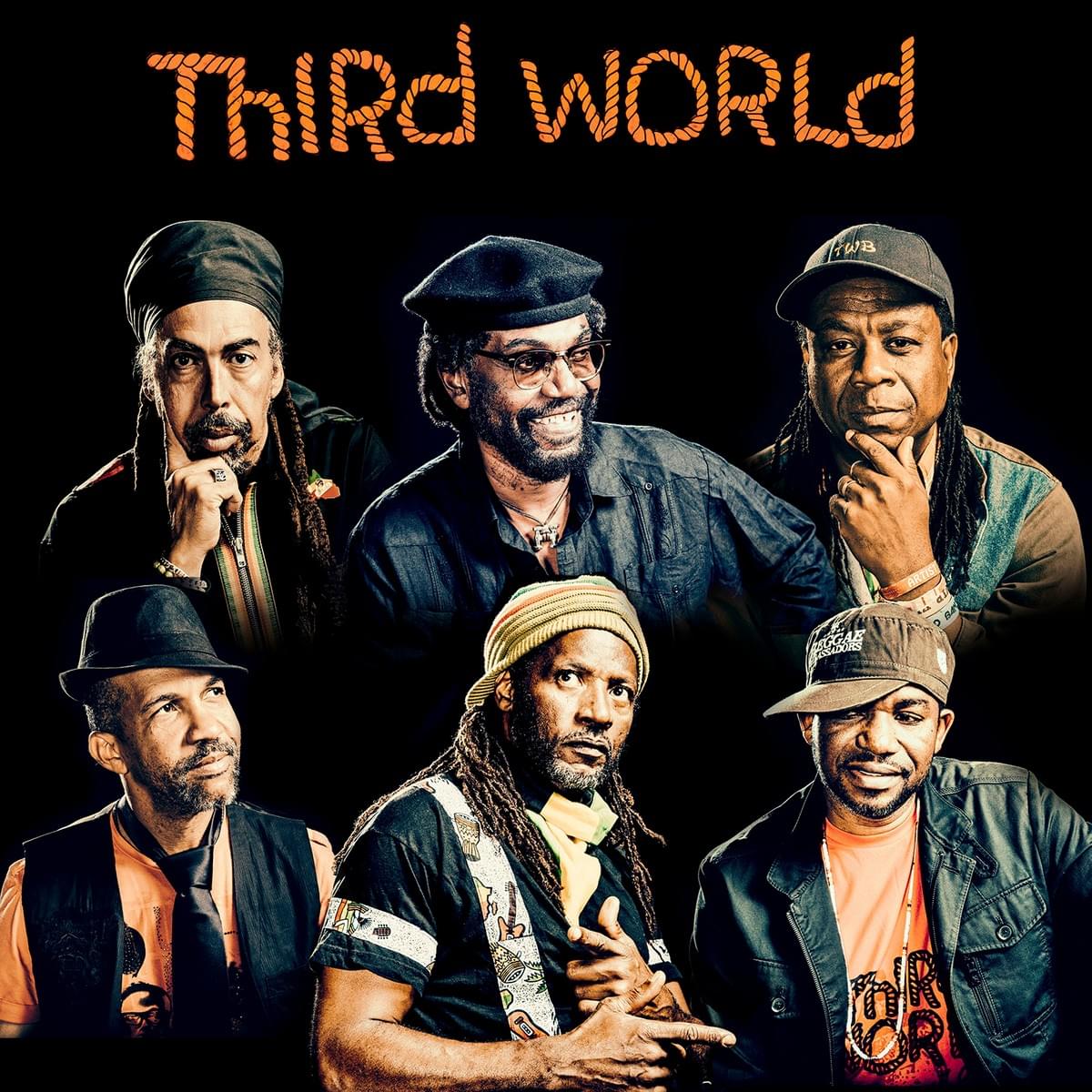
This is not simply the story of a band.
It is the story of refinement, discipline, and fearless musical vision.
Table of contents [Show]
A Global Sound Born in Jamaica
Formed in 1973, Third World emerged during a golden era of Jamaican music. While many groups focused on roots and raw expression, Third World dared to imagine something broader — reggae that could travel seamlessly across cultures without losing its soul.
At the center of that vision stood Stephen “Cat” Coore.
Classically trained as a cellist before mastering the guitar, Coore brought a rare musical vocabulary into reggae — one built on structure, harmony, restraint, and intention. His presence fundamentally changed how reggae could be composed and arranged.
This wasn’t rebellion against tradition.
It was evolution through respect.

Musicianship Beyond Convention
Stephen “Cat” Coore remains one of the most technically accomplished musicians in reggae history.
His classical background allowed him to think in movements rather than moments. Where others played chords, Coore shaped narratives. His guitar work was never excessive — it was precise, emotional, and deeply intelligent.
Every note had purpose.
Every silence had meaning.
This balance between discipline and feeling became one of Third World’s defining characteristics — music that felt effortless yet carried remarkable complexity beneath the surface.

Innovation Without Compromise
What truly set Third World apart was their fearless fusion of genres.
Soul.
Funk.
Jazz.
Pop.
Classical influence.
Yet somehow, the music never drifted from its Jamaican identity.
Songs like “96 Degrees in the Shade” carried historical weight and spiritual depth, while global hits such as “Now That We Found Love” proved that reggae could dominate international charts without losing dignity or message.
Much of this balance stemmed from Coore’s role in composition and arrangement — expanding reggae’s possibilities without diluting its roots.
That is rare artistry.

Songwriting That Served Meaning
Third World’s songwriting was never accidental.
Their arrangements were layered with intention — melodies supporting message, rhythms reinforcing emotion, structure guiding storytelling. Whether addressing colonial history, unity, love, or liberation, the music always carried substance.
Coore understood that great music doesn’t shout.
It resonates.
This philosophy allowed Third World’s catalogue to age gracefully, remaining relevant across decades and generations.
Cultural Ambassadors to the World
Stephen “Cat” Coore was more than a musician — he was a cultural representative.
On international stages, Third World carried Jamaican music with pride, intelligence, and authenticity. They introduced global audiences to reggae not as novelty, but as high art.
Through festivals, tours, and recordings across continents, Coore helped position Jamaican musicians as world-class composers and performers — not confined to genre labels, but respected within global music culture.
His influence stretches far beyond reggae alone, touching artists across jazz, soul, pop, and world music communities.
Longevity Built on Integrity
Few bands in modern music maintain relevance for decades. Even fewer do so without compromising artistic values.
Third World achieved both.
Through changing trends and shifting industries, Coore remained consistent — focused on musical excellence rather than spotlight chasing. That quiet integrity became part of his legacy.
Respect followed naturally.

Mentorship and Quiet Leadership
Unlike many legends, Stephen “Cat” Coore never sought to dominate the stage of recognition.
His influence often unfolded behind the scenes — mentoring younger musicians, offering guidance, and reinforcing discipline, humility, and respect for the craft.
He understood that preserving reggae meant investing in those who would carry it forward.
That contribution, though quieter, may be among his most important.

🏆 Final TFTAnews Verdict
Third World Band (with Stephen “Cat” Coore)
⭐⭐⭐⭐⭐ 5/5 — Timeless, Transformational, World-Class
Stephen “Cat” Coore was not merely part of reggae history — he refined it.
His work stands as a benchmark for musicians who seek to honour tradition while fearlessly expanding it. In a genre built on truth and rhythm, Coore added architecture, depth, and global reach.
His legacy is not measured in fame alone, but in how reggae learned to speak fluently to the world.
That is greatness. 🎶🌍







0 Comments
Leave a Comment
No comments yet. Be the first to share your thoughts!