
Ghana Independence Celebration Shines in Kalgoorlie
Community Spirit, Heritage, and Unity Mark the 69th Anniversary By The Forward Times Australia – Community Events Review


By The Forward Times Australia – Research & Innovation Desk
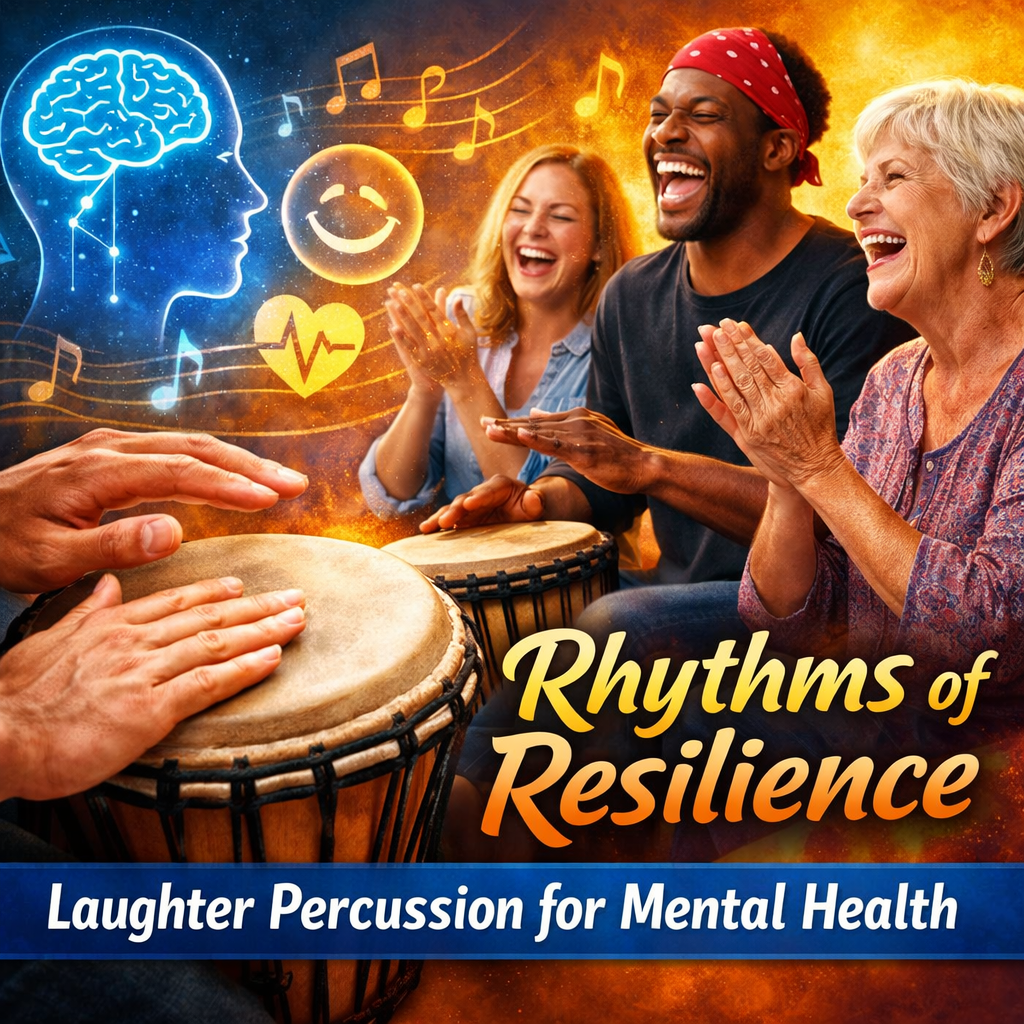
In an era where anxiety and depression are rising global health concerns, innovative approaches to mental wellbeing are becoming increasingly important. A recent peer-reviewed research study titled “Rhythms of Resilience: Neuropsychological Effects of Laughter Percussion on Anxiety and Depression in a Community-Based Pilot Study” is shedding new light on how rhythm, laughter, and community engagement can help improve mental health outcomes.
The study explores Laughter Percussion, a novel therapeutic approach that combines rhythmic drumming with structured laughter exercises to stimulate emotional expression, reduce stress, and build social connection.
Table of contents [Show]
Traditional treatments for anxiety and depression often rely heavily on medication or talk therapy. While these approaches remain important, researchers are increasingly exploring body-based and community-oriented interventions that activate emotional and neurological responses in different ways.
Laughter Percussion blends two powerful elements:
Together, these elements create an interactive environment where participants release stress, experience joy, and connect with others through shared rhythm and laughter.
Research in mental health already suggests that laughter therapy can positively influence brain chemistry, helping regulate neurotransmitters such as dopamine and serotonin while reducing stress hormones.
The pilot study involved 60 adults experiencing symptoms of anxiety and depression, who participated in an eight-week community program. Participants were divided into two groups: one group attended weekly Laughter Percussion sessions, while the control group received no intervention.
Researchers measured psychological outcomes using widely recognised assessment tools including the GAD-7 (Generalised Anxiety Disorder scale) and PHQ-9 (Patient Health Questionnaire for depression).
The results were striking.
After eight weeks of Laughter Percussion sessions:
Participants also reported additional positive experiences such as:
These findings suggest that the practice may serve as an effective complementary therapy for mental wellbeing.
The power of Laughter Percussion lies in the combination of sound, movement, and emotion.
Rhythmic drumming has been shown in previous research to improve psychological wellbeing and social resilience, reducing symptoms of depression and anxiety while strengthening community bonds.
When laughter is added to rhythmic movement, the body experiences a unique neuropsychological response:
This multisensory approach allows participants to experience healing through embodied expression rather than verbal discussion alone.
Another key dimension of the research is its emphasis on community engagement. Laughter Percussion sessions were conducted in group environments where individuals could share rhythmic expression, laughter, and movement collectively.
Such communal experiences are increasingly recognised as important for emotional resilience, especially in modern societies where social isolation and digital lifestyles have weakened traditional forms of communal interaction.
By combining art, rhythm, and mental health science, Laughter Percussion bridges cultural expression and clinical practice.
Although the study is a pilot project, the findings suggest that Laughter Percussion could become a promising complementary intervention for mental health care.
The research highlights the potential of creative arts therapies to address anxiety and depression in accessible and community-driven ways.
Researchers emphasise that further studies will be needed to evaluate long-term outcomes and broader clinical applications. However, the early results demonstrate that healing can sometimes emerge from the most human experiences—rhythm, laughter, and shared joy.
As the world continues to search for innovative ways to support mental wellbeing, approaches like Laughter Percussion remind us that healing does not always require complex technology or expensive interventions.
Sometimes, resilience can begin with something as simple as a drumbeat and a shared laugh.
View of Rhythms of Resilience: Neuropsychological Effects of Laughter Percussion on Anxiety and Depression in a Community-Based Pilot Study https://share.google/PFcuuiyCuRWDeX0BP

Community Spirit, Heritage, and Unity Mark the 69th Anniversary By The Forward Times Australia – Community Events Review
⭐ The Forward Times Australia – Research Review ⭐⭐⭐⭐⭐ Academic Excellence By Professor Idi (Ras) Banamungu PhD Human Rights and Migration Law | Doctor of Business Administration (DBA) Published in the International Journal of Economic Practices and Theories
At The Forward Times Australia Review Desk, we often explore historical figures whose influence shaped civilizations, cultures, and global narratives. One of the most fascinating personalities in biblical and African history is Queen Makeda of Sheba, widely regarded as one of the richest and most powerful women mentioned in the Bible.




No comments yet. Start the conversation!