By Admin Author01 Feb, 202626 mins read 1,049 views
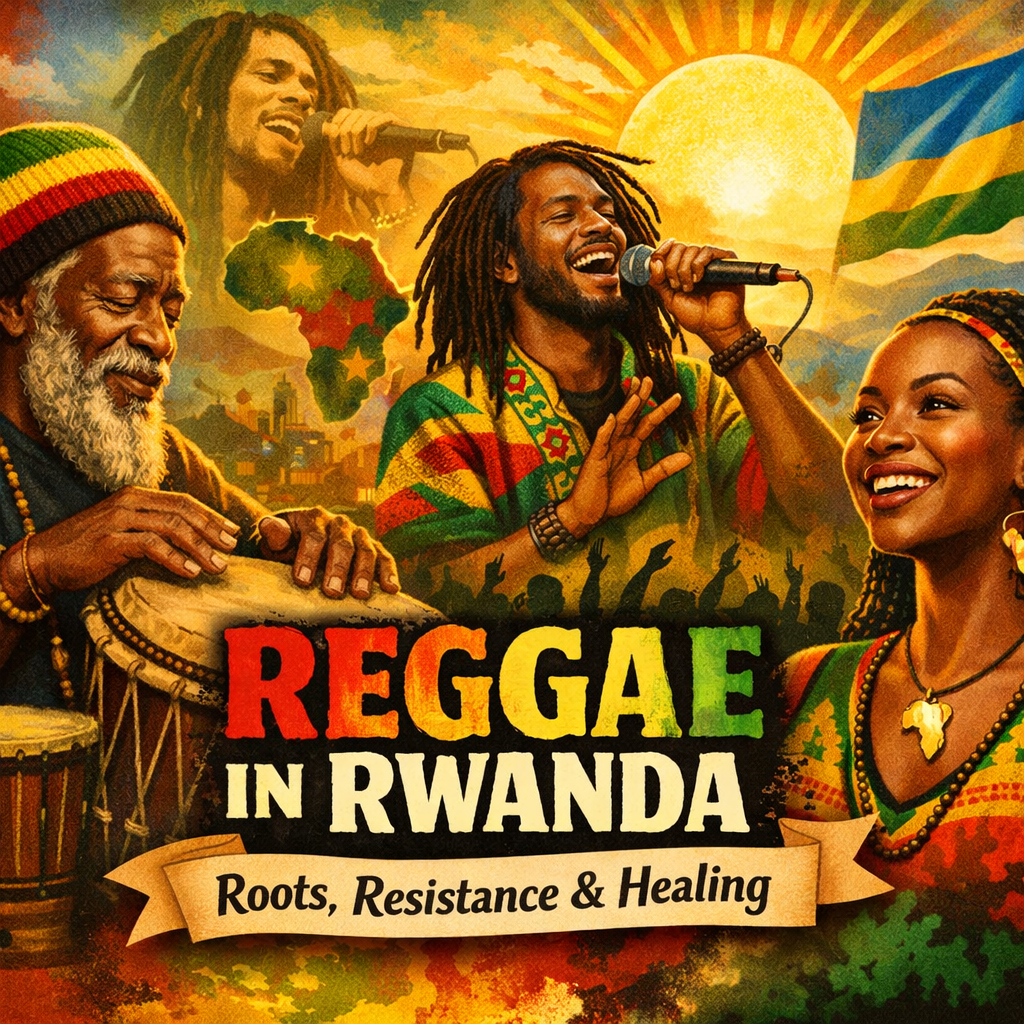
Reggae music in Rwanda did not arrive as a foreign sound — it arrived as a returning spirit.
Born from African rhythm, resistance, spirituality, and collective memory, reggae found natural ground in a nation whose cultural DNA already valued storytelling, morality, and communal responsibility. In Rwanda, reggae is not a trend — it is a philosophy carried by sound.
🌍 1. Cultural Context: Why Reggae Fits Rwanda So Naturally
At its core, reggae represents African thought expressed musically. Long before amplification and studios, African societies used rhythm, chant, and poetry to teach values and preserve truth.
Rwanda’s traditions of:
Oral history
Ancestral drumming
Moral storytelling
Community consciousness
created a cultural environment where reggae could take root organically.
Unlike entertainment-driven genres, reggae in Rwanda speaks to conscience rather than consumption. Its messages align deeply with national values such as:
Community responsibility
Respect for life and dignity
Collective healing
Moral leadership
This is why reggae continues to grow — even without heavy commercial support.
🔥 2. Historical Entry & Pan-African Influence
Reggae entered Rwanda gradually through:
Regional radio across East & Southern Africa
Cassette tapes during the 1980s–1990s
Student movements and conscious youth circles
Pan-African cultural exchange
The voices that resonated most strongly included:
Bob Marley — liberation theology and African unity
Lucky Dube — African social realism
Alpha Blondy — political consciousness
Their messages reflected African realities: injustice, colonial memory, resistance, dignity, and spiritual awakening — themes deeply familiar to Rwanda’s historical journey.
🕊️ 3. Reggae After the 1994 Genocide Against the Tutsi
Following the 1994 genocide against the Tutsi, Rwanda entered a period of profound reconstruction — emotionally, socially, and spiritually.
Music became a critical tool in this healing process.
While gospel emphasized forgiveness and mainstream music promoted unity slogans, reggae occupied a rare and necessary space:
Reflection without denial
Healing without forgetting
Peace without silence
Reggae offered slow, meditative soundscapes where individuals could process memory, grief, identity, and humanity. It became especially meaningful for:
Youth dialogue spaces
Community remembrance
Moral reflection forums
Cultural resilience initiatives
In many ways, reggae functioned as sonic therapy long before the term gained academic recognition.
🥁 4. Sound Identity: The Rwandan Reggae Style
Rwandan reggae is not an imitation of Jamaican reggae. It carries a distinct East African spiritual tone.
🔊 Musical Characteristics
Slower, reflective tempos
Deep bass with restrained instrumentation
Emphasis on lyrics over dance appeal
Integration of traditional percussion patterns
🥁 Nyabinghi Influence
Nyabinghi rhythms — spiritually rooted and African in origin — blend naturally with Rwanda’s ancestral drumming traditions. This connection reinforces reggae’s role as:
Ritual music
Conscious music
Communal grounding music
Lyrics commonly appear in Kinyarwanda, English, Swahili, or blended languages, allowing global messages to remain firmly rooted in local experience.
✊🏾 5. Lyrical Themes & Social Responsibility
In Rwanda, reggae is message-first music.
Recurring themes include:
Peace and reconciliation
African identity and pride
Youth responsibility and leadership
Resistance to corruption and injustice
Spiritual awareness and humanity
Unity beyond ethnic or social divisions
Many reggae artists view themselves not as celebrities, but as:
Educators
Messengers
Cultural custodians
Voices of conscience
This positions reggae closer to philosophy and social commentary than commercial entertainment.
🎤 6. Community, Rastafari & Live Culture
Reggae culture in Rwanda thrives primarily at the grassroots level through:
Community gatherings
Cultural festivals
Live acoustic sessions
Conscious youth forums
Rastafari reasoning circles
While large commercial structures remain limited, Kigali has emerged as a central hub for:
Conscious performances
Spoken-word and reggae fusion
Traditional music blended with roots reggae
Collaborative cultural expression
Artists often work alongside poets, drummers, educators, and historians — not just producers.
🌍 7. Challenges Facing Reggae in Rwanda
Despite its cultural depth, reggae faces ongoing challenges:
Limited mainstream radio airplay
Minimal commercial sponsorship
Media preference for pop and gospel
Lack of formal industry infrastructure
Yet paradoxically, these obstacles have helped preserve reggae’s authenticity — protecting it from over-commercialization and keeping its message intact.
🚀 8. The Future of Reggae in Rwanda
The next chapter of Rwandan reggae lies in:
Cultural tourism initiatives
Conscious music festivals
Youth education and leadership programs
Mental-health and healing projects
Academic recognition of music as therapy
As global audiences increasingly seek Afro-roots, conscious sound, and healing music, Rwanda’s reggae movement stands ready — grounded, dignified, and spiritually intact.
⭐ Editorial Star Rating
Category
Rating
Cultural Authenticity
⭐⭐⭐⭐⭐
Spiritual Depth
⭐⭐⭐⭐⭐
Healing & Social Impact
⭐⭐⭐⭐⭐
African Identity
⭐⭐⭐⭐⭐
Lyrical Substance
⭐⭐⭐⭐⭐
Industry Support
⭐⭐⭐☆
Global Visibility
⭐⭐⭐☆
Longevity Potential
⭐⭐⭐⭐☆
📝 Final Editorial Note
Reggae music in Rwanda is not loud — it is lasting. It does not chase charts — it guards conscience. It does not entertain the moment — it educates generations.
In Rwanda, reggae is:
A teacher
A healer
A historian
A moral compass
And as long as Rwanda values dignity, memory, and humanity — reggae will always have a home.
In an era where live music must compete with endless digital noise, Viva Latin Afronkila remind audiences why authentic, rhythm-driven performance still matters. This dynamic Afro-Latin band has steadily built a reputation for delivering energetic, culturally grounded, and technically polished live shows that transcend borders, genres, and expectations.










No comments yet. Start the conversation!